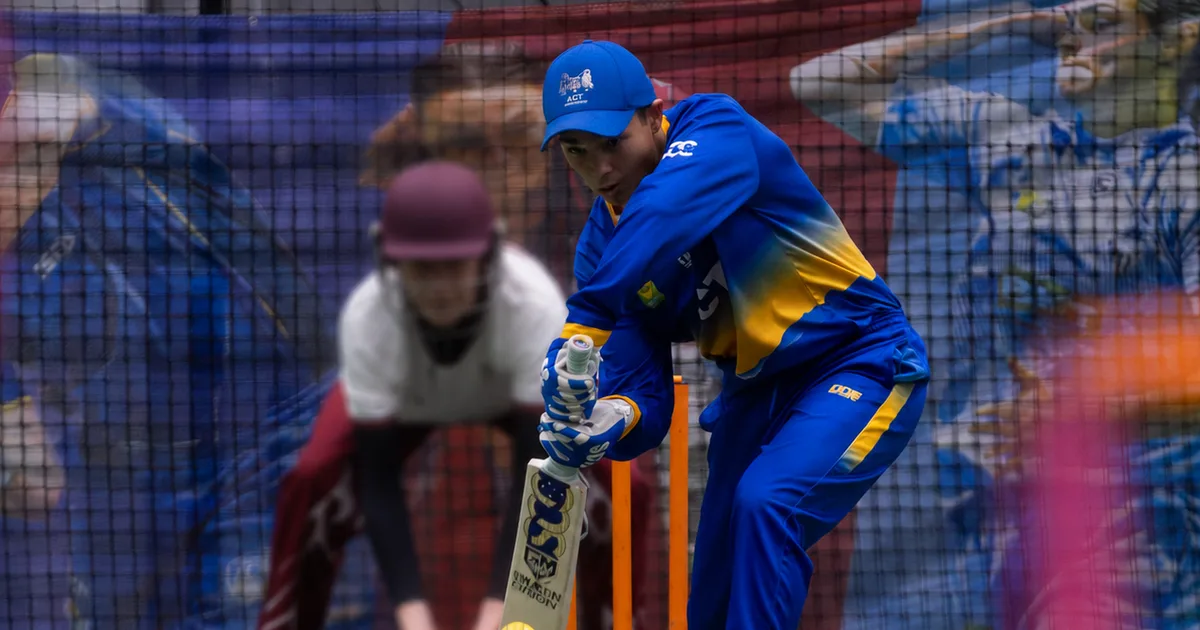
Tu was not sure how to run a sports fundraiser for her son, Luc, who had just been selected to represent Australia in the U16 Indoor Cricket World Series. The team was heading to South Africa in September, and the family needed to raise money. But how they raised it mattered.
For Tu and her husband Mark, just asking people for money was never really on the table. They value being self-sufficient, and the traditional donation-style platforms felt uncomfortable. Lucky Squares gave them a different way in.
A cricket kid through and through
Luc plays outdoor cricket through summer and indoor cricket through winter. When he is not on the pitch, he is watching: test matches, T20s, World Cups, and whatever highlights he can find from the 1980s and 90s. Tu and Mark cannot quite explain where the passion came from. They've just always backed it.
His selection for the Australian U16 squad was the payoff for all of it. Away from the field, Luc has also been doing some quiet work on his mental game. He had started to get too caught up in stats and expectations, and made a deliberate decision to let that go: to stay present, focus on being there for his team, and not let the mental noise crowd out the cricket itself.
Finding Lucky Squares
Other cricket families in Tu's circle had come across the Lucky Squares concept: a fundraiser built around a numbered grid where supporters buy a square and a winner is drawn at the end. Tu turned to ChatGPT to find out how to run one. When she asked which platforms could help, it gave her three options, and only one of them was Australian.
She took a look at Lucky Squares Australia and liked what she saw.
"The process of launching a campaign was seamless and the support from the Lucky Squares team was fantastic," Tu says.
She set up a 100-square grid at $20 per square, with $300, $100, and $50 cash prizes for the draw.