P&C Fundraising Ideas That Actually Work for Australian Schools
Image credit: Lincoln Beddoe | iStock © 2022
← Back to Blog
seo_pillarfundraisingeducationcommunity

P&C Fundraising Ideas That Actually Work for Australian Schools

L
Lucky Squares Australia
7 May 2026
ShareFacebookXLinkedIn

Running a P&C or P&F fundraiser is one of those jobs that looks straightforward until you are actually doing it. You need something parents will get behind, that does not require a small army of volunteers, and that raises enough money to make it worth everyone's time.

Here are the fundraising ideas that consistently work for Australian school communities, with honest notes on what each one takes to pull off.

1. Lucky Squares Grid Fundraiser

A Lucky Squares grid is one of the simplest fundraisers a P&C or P&F can run. You set up a grid of numbered squares (25, 50, or 100), set a price per square, and share the link with school families. Parents pick their squares, pay online or by bank transfer, and a winner is drawn at random.

No product to sell, no cash to collect at the school gate, no raffle books to hand out. Just a link or QR code in the school app or newsletter.

At $5 per square on a 100-square grid, you raise $500. At $10 per square, that is $1,000. Many schools run a 100-square grid at $10 per square and sell out within a week, then draw the winner live at assembly or the school fete.

Start a school grid fundraiser with Lucky Squares — set up is free and takes about five minutes.

2. School Fete

The school fete is the backbone of P&C/P&F fundraising in Australia. A well-run fete can raise thousands of dollars in a single day and doubles as a genuine community event that brings families, teachers, and local businesses together.

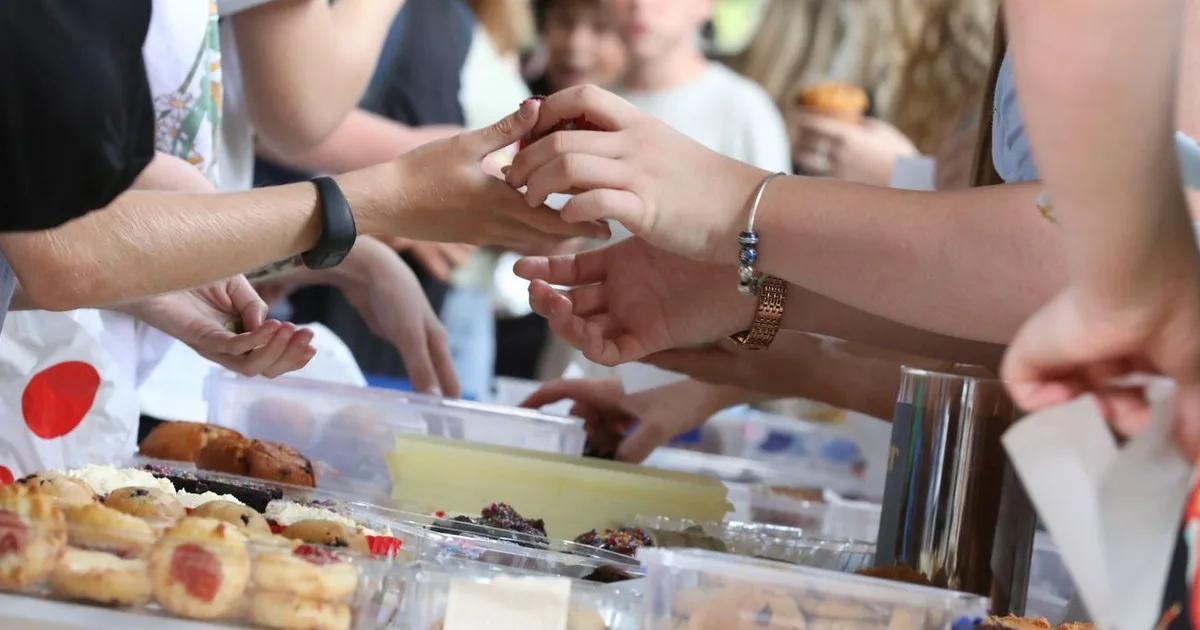
The key to a profitable fete is keeping costs low and revenue streams diverse: a sausage sizzle, a cake stall, a raffle, a second-hand uniform shop, games, rides, and a range of stalls. Local businesses often donate prizes or products in exchange for a mention in the program.

The downside is effort. A school fete typically takes months of planning and dozens of volunteers on the day. It works best as an annual centrepiece that other smaller fundraisers build toward throughout the year.

3. Fun Run or Colour Run

Fun runs have been a staple of Australian school fundraising for decades because they involve the whole school, they are genuinely fun for kids, and sponsorship-per-lap means the fundraising happens before the event.

Colour runs (where children get hit with coloured powder at stations around the course) have become particularly popular in primary schools. They photograph well, create excitement with families, and tend to generate strong participation from younger students.

Many schools raise $5,000 to $15,000 from a well-run fun run, especially when classroom-level competition is built in. Budget for a fundraising platform fee if you use an online sponsorship tool.

4. P&C Trivia Night

A trivia night is a reliable adult fundraiser that gives parents a reason to get together outside school hours. Tickets are typically $20 to $30 per person, teams of six to eight, with a bring-your-own supper or catered option. Additional revenue comes from a raffle, a silent auction, and bar sales if you are licensed.

Trivia nights work best at schools with a strong parent community and enough space to host 100 to 200 people. Delegate the question-writing to a reliable committee member or buy a pre-packaged trivia pack to save hours of preparation.

5. 100 Club Draw

The 100 Club format has been a staple of Australian community fundraising for decades. In its traditional form it runs as a recurring monthly membership draw. Lucky Squares runs a simpler version: set up a grid of 100 numbered squares, sell them to parent supporters, and draw a winner. No memberships, no monthly renewals — just one campaign and one draw.

A 100-square grid at $10 per square raises $1,000. Run the draw at assembly or a P&C meeting, or let the platform pick the winner and notify them automatically.

6. Sausage Sizzle

The humble sausage sizzle is one of Australia's great community traditions, and the margins make it worth the effort. Schools typically run them on casual days, sports days, or the last day of term.

Ready to fundraise for your school?

Set up your grid in under five minutes, share the link with parents and your P&C, and run a live draw at assembly or a school event. No spreadsheets, no stress.

Start your fundraiser free →

A well-run sausage sizzle with 300 students can clear $300 to $500 in a morning with a small crew of parent volunteers. Bread, sausages, and sauce are all you need. Many local butchers will donate or discount sausages in exchange for a mention in the school newsletter.

7. Mothers Day and Fathers Day Stalls

Seasonal gift stalls are a reliable primary school fundraiser. Children browse a table of small gifts (typically $2 to $10 each) and buy something for their parent. The P&C buys stock wholesale, marks it up, and keeps the margin.

The emotional pull is strong: kids love choosing something themselves, and parents rarely say no to a thoughtful present. Most specialist school fundraising suppliers handle the logistics for you.

8. Second-Hand Uniform Shop

Not a one-off event but a reliable ongoing revenue stream. A second-hand uniform shop run by the P&C/P&F collects donated uniforms, cleans and prices them, and sells them at a fraction of the new cost. Families love the saving, the school benefits from families staying in uniform, and the committee keeps the margin.

Once it is running, a lunchtime or before-school shop needs just one or two volunteers per session. A well-run uniform shop can raise $2,000 to $5,000 a year with minimal ongoing effort.

9. Class Art Prints

Each class creates a piece of collective artwork — handprints, collaborative paintings, illustrated scenes from school life — which is printed onto a product: a tea towel, a tote bag, a cushion cover, or a framed print. Parents buy their child's class product as a keepsake.

These sell particularly well around Mother's Day and Christmas. Grandparents and extended family are an untapped market too. A well-organised art print fundraiser typically returns 40 to 60 percent of revenue as profit.

10. Local Business Sponsorship

Sponsorship is often overlooked by P&C and P&F committees because it feels more complicated than selling tickets or running a stall. But local businesses are frequently willing to contribute, especially in exchange for visible recognition at the fete, in the newsletter, or on event signage.

Put together a simple one-page proposal with two or three tiers ($250, $500, $1,000) and clear benefits at each level. Local real estate agents, dentists, and sports stores are often the most receptive, especially when their staff have children at the school.

The classics: food fundraisers that sell themselves

Chocolates, cookies, hot cross buns, lamingtons. These fundraisers have been running at Australian schools for decades because they work. Families know what they're getting, and they buy. Timing makes a big difference: hot cross buns sell best on pre-order in the weeks before Easter, while lamingtons and cookies peak around Mother's Day or end of term.

The main challenge is logistics. You're coordinating orders, collecting money, and managing delivery, which can become a weekend project for whoever volunteered. Adding a simple online payment option takes most of the cash-handling headache out of it. Done well, a food fundraiser can raise $500 to $2,000 with minimal upfront cost.

A few things that make the difference

Pick one or two fundraisers and do them well. A single well-run Lucky Squares grid or trivia night raises more than three half-hearted events that exhaust your volunteers.

Start early in the year. Lock in your fundraising calendar at the first P&C/P&F meeting so events do not land on top of each other or during exam season.

Make it easy for parents to participate. Online payment, bank transfer, or card on the day means parents have no excuse not to buy in. The days of cash in an envelope are over.

Tell families what the money is for. People give more when there is a specific goal. "New shade sail for the junior playground" gets more traction than "school improvement fund" every time.

Ready to run a Lucky Squares fundraiser for your school? See how it works for P&C/P&F committees.

🤝 Know an organisation that should hear about this?

Not everyone wants to run a fundraiser themselves, but you might know the right person to ask: a P&C member, club treasurer, or someone leading fundraising for a school, club or charity. Refer them and you will go in the draw to win $100 in our monthly referral prize draw.

Keep exploring
How it works
Set up your fundraiser grid in under five minutes.
Frequently asked questions
Everything organisers and participants need to know.
Raffle compliance guide
State-by-state permit requirements for Australian fundraisers.
📬 Get monthly fundraising tips

Monthly fundraising tips for Australian sports clubs, schools and not-for-profits. No spam, unsubscribe any time.

Found this useful? Share it with your club or community.

ShareFacebookXLinkedIn
← Back to Blog